Artificial intelligence (AI) is no longer just a concept associated with science fiction or advanced technology companies. Today, it has become one of the most powerful tools shaping the future of digital marketing. Businesses of all sizes are using AI to understand customers better, create personalized experiences, automate repetitive tasks, and improve marketing performance.
The digital marketing landscape has changed significantly in recent years. Customers expect brands to deliver relevant content, quick responses, and personalized experiences across multiple platforms. Traditional marketing methods alone are often not enough to meet these expectations. This is where artificial intelligence in marketing provides a major advantage.
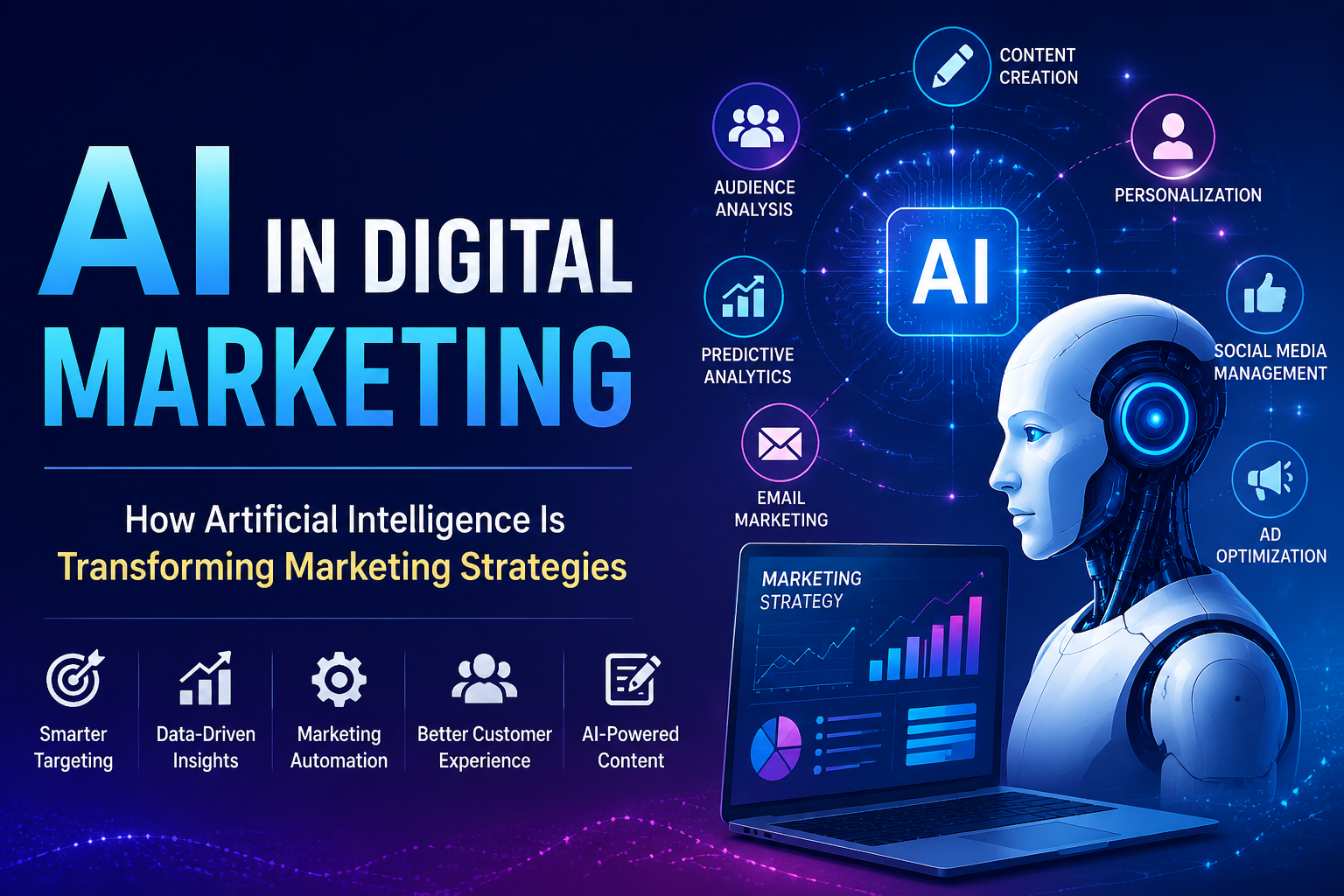
AI helps marketers analyze large amounts of data, predict customer behavior, optimize advertising campaigns, and create engaging content faster. From chatbots and recommendation systems to AI-powered analytics and automated email campaigns, artificial intelligence is changing how businesses connect with their audiences.
This article explores how AI is transforming digital marketing strategies, the benefits businesses can gain, popular AI marketing applications, and what the future may look like.
What Is AI in Digital Marketing?
AI in digital marketing refers to the use of artificial intelligence technologies to improve marketing activities, decision-making, and customer experiences. These technologies allow machines to analyze information, identify patterns, learn from data, and perform tasks that traditionally require human intelligence.
AI marketing systems can process customer data, recognize trends, and provide insights that help marketers create more effective campaigns. Instead of relying only on assumptions, businesses can use real-time information to make smarter decisions.
Some common AI technologies used in digital marketing include:
- Machine learning: Helps systems learn from data and improve predictions over time.
- Natural language processing (NLP): Allows AI systems to understand and generate human language.
- Predictive analytics: Uses historical data to forecast customer actions and trends.
- Generative AI: Creates content such as articles, images, emails, and marketing ideas.
- Automation technology: Handles repetitive marketing tasks with minimal human involvement.
Together, these technologies help businesses create faster, more efficient, and more personalized marketing strategies.
How AI Is Transforming Digital Marketing Strategies
1. Personalized Customer Experiences
One of the biggest advantages of AI in digital marketing is its ability to create personalized customer experiences.
Modern consumers do not want generic advertisements or irrelevant messages. They expect brands to understand their preferences and provide recommendations based on their interests.
AI analyzes customer information such as:
- Browsing behavior
- Purchase history
- Search activity
- Content preferences
- Demographic information
- Engagement patterns
Using this data, businesses can deliver more relevant recommendations and targeted messages.
For example, online shopping platforms use AI recommendation systems to suggest products based on previous purchases and browsing activity. Streaming services recommend movies and shows based on viewing habits. Email marketers use AI to send personalized offers at the right time.
Personalization improves customer satisfaction, increases engagement, and can lead to higher conversion rates.
2. AI-Powered Content Creation
Content remains one of the most important parts of digital marketing, but creating high-quality content consistently requires time and resources. AI-powered content tools are helping marketers streamline the content creation process.
AI can assist with:
- Blog topic ideas
- Keyword research
- Social media captions
- Product descriptions
- Email drafts
- Ad copy
- Content summaries
- Marketing reports
Generative AI tools can help marketers overcome creative blocks and produce initial drafts quickly. However, human creativity and expertise remain essential for ensuring content is accurate, valuable, and aligned with brand goals.
The most effective approach is combining AI efficiency with human strategy. AI can handle repetitive tasks, while marketers focus on storytelling, creativity, and understanding customer needs.
3. Smarter Search Engine Optimization (SEO)
SEO is constantly evolving, and AI is playing an increasingly important role in helping businesses improve their search visibility.
AI-powered SEO tools can analyze:
- Search trends
- Competitor strategies
- Keyword opportunities
- Content performance
- User behavior
Marketers can use these insights to create content that better matches search intent.
AI also helps with technical SEO tasks such as identifying website issues, analyzing backlinks, and improving content structure. By using AI-driven insights, businesses can make more informed SEO decisions instead of relying only on guesswork.
However, successful SEO still requires understanding audiences, creating useful content, and following search engine best practices.
4. Better Customer Support With AI Chatbots
Customer service is another area where AI is making a major impact. AI-powered chatbots allow businesses to provide instant assistance at any time of the day.
Traditional customer support teams often struggle with high volumes of repetitive questions. AI chatbots can handle common requests such as:
- Order updates
- Product information
- Appointment scheduling
- Frequently asked questions
- Basic troubleshooting
This allows human employees to focus on more complex customer issues.
Modern AI chatbots are becoming increasingly advanced. They can understand customer questions, provide personalized responses, and improve their performance through machine learning.
A faster and more convenient customer experience can increase satisfaction and strengthen brand loyalty.
5. Improved Advertising Performance
Digital advertising requires continuous testing and optimization. AI helps marketers improve advertising campaigns by analyzing performance data and making recommendations.
AI-powered advertising platforms can help with:
- Audience targeting
- Budget optimization
- Ad placement decisions
- Performance predictions
- Automated bidding
- Creative testing
Instead of manually adjusting every campaign element, marketers can use AI to identify what works best.
For example, AI can analyze which audiences are most likely to convert and adjust advertising strategies accordingly. This helps businesses reduce wasted spending and improve return on investment.
6. Predictive Analytics and Customer Insights
Understanding future customer behavior is one of the most valuable benefits of AI in marketing.
Predictive analytics uses historical data and machine learning algorithms to identify patterns and forecast future actions.
Businesses can use predictive analytics to:
- Identify potential customers
- Predict buying behavior
- Improve sales forecasting
- Reduce customer churn
- Optimize marketing campaigns
For example, a company may use AI to identify customers who are likely to stop using a service. The business can then create targeted campaigns to retain those customers.
These insights allow marketers to become more proactive instead of simply reacting to customer behavior.
7. Social Media Marketing Automation
Managing social media requires consistent posting, monitoring, and engagement. AI tools help businesses simplify many social media tasks.
AI can support social media marketing by:
- Suggesting content ideas
- Analyzing audience engagement
- Identifying trending topics
- Scheduling posts
- Monitoring brand mentions
- Measuring campaign performance
AI sentiment analysis can also help businesses understand how customers feel about their brand by analyzing online conversations.
This information helps marketers adjust their strategies and respond more effectively to audience needs.
Benefits of AI in Digital Marketing
The adoption of AI provides several important benefits for businesses.
Increased Efficiency
AI automates repetitive tasks, allowing marketing teams to save time and focus on strategy and creativity.
Tasks that once required hours of manual work can now be completed faster through automation.
Better Decision-Making
AI provides valuable insights from large amounts of data. Marketers can make decisions based on accurate information rather than assumptions.
Improved Customer Engagement
Personalized recommendations, targeted messaging, and faster responses help businesses create stronger relationships with customers.
Cost Savings
Automation can reduce operational costs by improving productivity and reducing the need for manual processes.
Higher Marketing Performance
AI helps optimize campaigns, improve targeting, and increase the effectiveness of marketing investments.
Popular AI Tools Used in Digital Marketing
Many AI-powered platforms are helping marketers improve their workflows. Some common categories include:
AI Writing and Content Tools
These tools assist with generating ideas, creating drafts, improving grammar, and optimizing content.
AI SEO Tools
SEO platforms use artificial intelligence to analyze keywords, competitors, rankings, and content opportunities.
AI Analytics Platforms
These tools identify patterns in customer data and provide marketing insights.
AI Design Tools
AI-powered design platforms help create images, graphics, and visual marketing materials.
AI Customer Service Tools
Chatbots and virtual assistants help businesses provide faster customer support.
The right AI tools depend on a company’s goals, budget, and marketing needs.
Challenges of Using AI in Digital Marketing
Although AI offers many benefits, businesses should also understand its limitations.
Maintaining Human Creativity
AI can generate content and ideas, but human creativity remains important. Marketing requires emotional understanding, storytelling, and brand personality.
Data Privacy Concerns
AI systems often rely on customer data. Businesses must handle this information responsibly and follow privacy regulations.
Accuracy Issues
AI-generated information may sometimes contain errors. Human review is necessary to ensure quality and accuracy.
Learning Curve
Businesses need time and training to use AI tools effectively. Successful AI adoption requires a clear strategy.
The Future of AI in Digital Marketing
The future of digital marketing will likely involve deeper integration between artificial intelligence and human creativity.
As AI technology continues to improve, marketers can expect:
- More advanced personalization
- Smarter automation
- Better customer predictions
- More interactive experiences
- Improved voice and visual search capabilities
- More efficient marketing workflows
AI will not replace marketers but will change how they work. Professionals who understand how to use AI effectively will have a significant advantage in the evolving digital landscape.
The most successful businesses will combine AI technology with human expertise to create marketing strategies that are efficient, creative, and customer-focused.
Final Thoughts
AI in digital marketing is transforming the way businesses attract, engage, and retain customers. From personalized experiences and content creation to advertising optimization and predictive analytics, artificial intelligence is helping marketers achieve better results.
Also Read: The Ultimate Guide to Best Web Hosting Services (2026)
While AI provides powerful capabilities, it works best when combined with human creativity, strategy, and ethical decision-making. Businesses that embrace AI while maintaining a customer-first approach will be better prepared for the future of digital marketing.
Artificial intelligence is not just a trend. It is becoming an essential part of modern marketing strategies, helping businesses work smarter, connect with customers more effectively, and compete in an increasingly digital world.