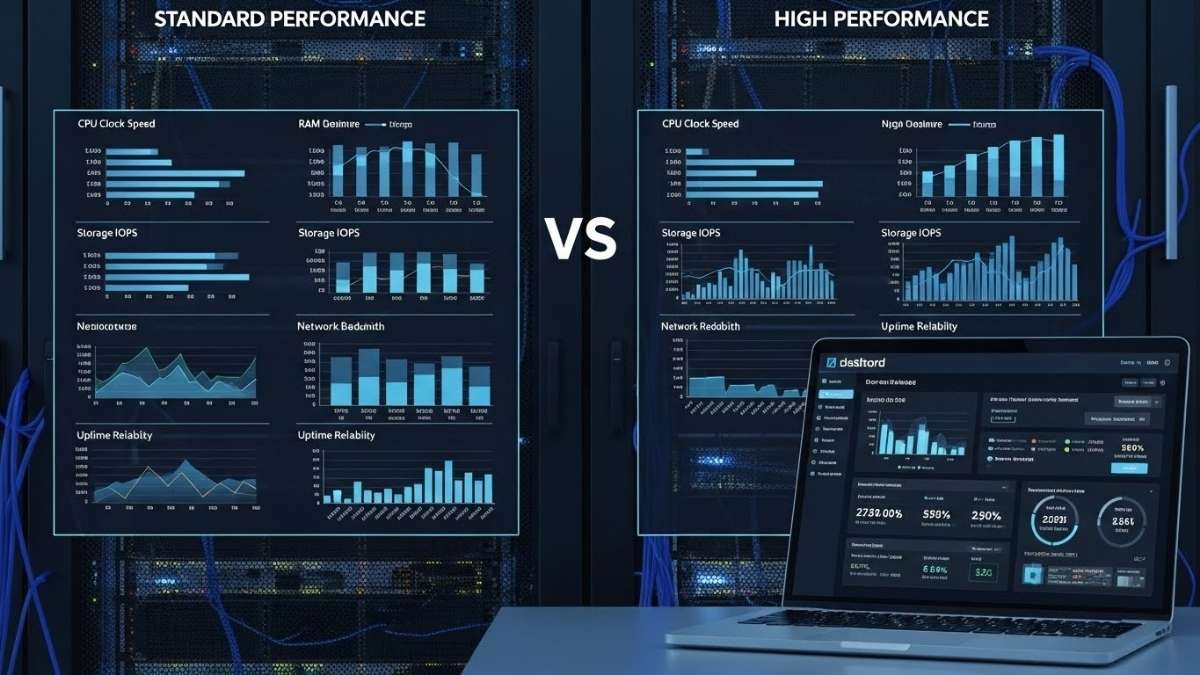

1. Introduction: Why Web Hosting Choice Defines Your Digital Success
Selecting the right web hosting platform is one of the most critical infrastructure decisions you will make for your website, digital enterprise, or online store in 2026. Your web host is the foundational engine powering your entire digital presence. It dictates everything from page load speed, search engine optimization (SEO) rankings, user retention, and security parameters to overall conversion rates and uptime reliability.
In today’s fast-paced web environment, user patience is virtually zero. Google’s Core Web Vitals strictly penalize websites that load slowly or fail responsiveness benchmarks. Choosing an outdated, sluggish, or unreliable host can actively destroy your search visibility and turn away potential customers before they even see your content. Conversely, aligning your digital assets with a high-performance, modern web host equips you with rapid server response times (TTFB), automated security protocols, scalable cloud environments, and seamless site management.
Based on extensive real-world benchmark tests evaluating over 60 web hosting platforms, this definitive guide provides a deep-dive analysis into the top-performing hosting providers for 2026. Whether you are launching your first personal blog, deploying an advanced eCommerce platform, managing client agency sites, or building complex web applications, this guide breaks down performance metrics, feature sets, pricing models, and hidden pros and cons so you can make an informed, ROI-driven choice.
2. Comprehensive Comparison Summary
Below is an executive summary comparing the top web hosting platforms across core specifications, ideal user profiles, starting price points, and key differentiators.
| Hosting Provider | Primary Best For | Starting Price | Core Highlights | Key Limitation |
| Hostinger | Best Overall / Beginners | $2.99 / mo | AI Page Builder, Free Domain, Shared Node.js, Low Entry Cost | Write speeds throttled under heavy load |
| ScalaHosting | eCommerce & Managed Cloud VPS | $12.95 / mo | SPanel Control, Fully Managed Cloud, Unlimited Email, 24/7 Human Support | Slight learning curve for custom SPanel |
| SiteGround | Growing Small Businesses | $4.99 / mo | Google Cloud Infrastructure, Top-tier WordPress Optimization | Higher renewal rates after initial contract |
| Bluehost | WordPress Beginners | $2.95 / mo | Official WordPress Recommendation, WonderBlocks Builder | High renewal costs; upselling during checkout |
| WP Engine | Enterprise Managed WordPress | $20.00 / mo | Staging Environments, Automated Security, Ultra-Fast CDN | Strict visitor limits; premium price tag |
3. In-Depth Reviews of the Top Hosting Providers
1. Hostinger — Best Overall Web Hosting Platform
Hostinger has cemented its position as the fastest-growing web hosting company globally, and for good reason. It balances exceptional affordability with cutting-edge innovations in artificial intelligence, server management, and web development tooling.
Core Features & Infrastructure
Hostinger provides a custom-built, modern control panel called hPanel, which is significantly more intuitive and visually appealing than legacy cPanel setups. Its entry-level shared and cloud plans run on high-speed NVMe storage, distributed global data centers (US, UK, France, India, Brazil, Lithuania), and HTTP/3 support. It also features an integrated AI Website Builder, AI Copywriter, and AI SysAdmin tools for its VPS tier.
Performance & Speed Tests
In speed benchmark testing, Hostinger consistently registers Time to First Byte (TTFB) scores under 350 ms across North American and European nodes. Their uptime guarantee stands at 99.9%, supported by automated daily and weekly backups dependably stored off-site.
Key Advantage: Node.js & Vibe Coding Support
Hostinger is one of the few low-cost hosts offering native shared Node.js hosting alongside traditional PHP, making it an incredible choice for modern full-stack web app developers, static site generators, and JavaScript frameworks.
-
Pros: Extremely affordable introductory rates; comprehensive AI creation suite; sleek hPanel; free custom email accounts; automated malware scanner.
-
Cons: Storage disk write speeds are throttled during intense resource spikes; lack of managed dedicated VPS environments for legacy software.
2. ScalaHosting — Best for eCommerce & Managed Cloud VPS
When hosting an eCommerce shop, business management portal, or high-traffic enterprise site, shared hosting environments pose significant performance risks. ScalaHosting stands out as the ultimate solution for mission-critical digital assets requiring dedicated Cloud VPS resources.
Cloud VPS Security & SPanel Ecosystem
ScalaHosting’s flagship feature is SPanel—an all-in-one, light-speed alternative to cPanel that eliminates expensive license fees. SPanel integrates SShield, an active AI cybersecurity engine that blocks 99.998% of cyberattacks in real-time, monitoring server traffic live to stop malware execution before damage occurs.
Human Support & eCommerce Integrations
Unlike hosts that force users into continuous automated chatbot loops, ScalaHosting maintains 24/7 human-to-human support with response times averaging under 30 seconds. ScalaHosting is officially endorsed by OpenCart and recommended widely by WooCommerce and Joomla development communities due to its seamless scaling capabilities.
-
Pros: Fully managed Cloud VPS at shared hosting pricing; zero-downtime resource scaling (CPU/RAM); unlimited email mailboxes; guaranteed human support.
-
Cons: Onboarding requires basic familiarity with Cloud VPS concepts; slightly less streamlined for absolute non-technical beginners.
3. SiteGround — Best for Small Businesses & Managed WordPress
SiteGround has built an outstanding reputation for premium performance, premium security, and unmatched customer satisfaction, making it a staple for established small businesses.
Google Cloud Power & Speed Acceleration
SiteGround builds its entire infrastructure on the Google Cloud Platform, guaranteeing top-tier reliability, state-of-the-art SSD storage, and green-energy efficiency. Their proprietary Ultrafast PHP and custom NGINX Direct Delivery caching engine speed up WordPress page loads by up to 500% compared to standard setups.
-
Pros: Exceptional security isolation; automated WordPress updates; built-in staging tools; free SSL and daily backups; 99.99% real-world uptime.
-
Cons: High renewal prices after initial promotional periods; fixed storage space limits across all plans.
4. Hosting Architecture Breakdown: Shared vs. VPS vs. Cloud
To choose the best hosting provider, you must understand the underlying server architecture that powers your website. Choosing the wrong server architecture can lead to unexpected crashes, security vulnerabilities, or wasted financial resources.
Shared Hosting
In a shared hosting environment, hundreds or thousands of individual websites reside on a single physical server, sharing the same CPU, RAM, and disk storage resources.
-
Best for: Personal blogs, portfolio sites, small local businesses, and new projects with low traffic (under 10,000 monthly visits).
-
Pros: Highly affordable ($2 – $5/month), maintenance-free.
-
Cons: “Bad neighbor effect”—if another site on the server experiences a massive traffic spike or security breach, your site’s performance may degrade.
Virtual Private Server (VPS) Hosting
VPS hosting uses hypervisor virtualization to partition a physical server into distinct, isolated virtual servers. Each VPS receives dedicated CPU cores, dedicated RAM, and private storage allocations.
-
Best for: E-commerce stores, rapidly scaling blogs, SaaS applications, and business sites requiring custom software configurations.
-
Pros: Guaranteed dedicated resources, full root access option, higher security, immunity from neighboring sites.
-
Cons: Higher monthly cost ($12 – $50/month); unmanaged plans require sysadmin technical knowledge.
Cloud Hosting
Cloud hosting connects a network of physical servers into a unified virtual cluster. Your website data is replicated across multiple nodes in real-time. If one physical hardware server fails, another seamlessly takes its place without causing downtime.
-
Best for: Enterprise web sites, viral media outlets, international brands, and web apps with fluctuating traffic surges.
-
Pros: Infinite on-demand scalability, high fault tolerance, superior regional latency management.
-
Cons: Dynamic pricing can become expensive if traffic volume surges unexpectedly.
5. Essential Buying Criteria: How to Choose the Right Web Host
When evaluating web hosting options, look beyond marketing catchphrases and focus on these quantifiable benchmarks:
-
Server Speed & Response Time (TTFB): Look for Time to First Byte under 400ms. High TTFB directly damages Google Core Web Vitals and SEO rankings. Ensure your host utilizes NVMe SSD drives and HTTP/2 or HTTP/3 web servers.
-
Guaranteed Uptime SLA: Demand an absolute minimum uptime guarantee of 99.9%. Anything lower equates to hours of total server downtime each month, directly forfeiting sales revenue.
-
Data Center Locations: Ensure the host allows you to select a physical server data center situated geographically close to your primary audience (e.g., US East, EU Central, Asia-Pacific).
-
Security Features: A robust hosting package must include free SSL certificates, automated daily off-site backups, DDoS mitigation, and real-world web application firewalls (WAF).
-
Renewal Pricing Transparency: Always check the standard renewal rate before purchasing. Many providers offer massive 70-80% introductory discounts that revert to standard pricing after year one.
6. Frequently Asked Questions (SEO & Buyer FAQs)
Q1: How does web hosting choice directly impact my Google SEO rankings?
Web hosting impacts SEO through three primary channels: site speed (Core Web Vitals), server uptime, and geographic location. Google explicitly uses page load speed as a ranking factor. Slow server responses (high TTFB) lower your rankings. Furthermore, if your host experiences frequent server downtime, Google bots will fail to crawl your site, leading to de-indexing of key pages.
Q2: Can I start with shared hosting and upgrade to VPS or Cloud later?
Yes. Providers like Hostinger and ScalaHosting feature seamless upgrade paths. You can launch your site on a basic, cost-effective shared plan and migrate to Cloud or Managed VPS hosting with a single click as your monthly traffic volume increases.
Q3: What is the difference between Managed and Unmanaged VPS hosting?
On an unmanaged VPS, the provider only supplies the virtual server hardware and operating system; you are responsible for security updates, firewall rules, control panel installation, and web server setup. On a managed VPS (such as ScalaHosting Cloud VPS), the provider handles server configuration, updates, monitoring, daily backups, and security patches, allowing you to focus entirely on building your business.
Also Read: Business Web Hosting & Cloud Solutions: The Foundation of Modern Business Success
7. Final Verdict: Which Web Hosting Service Should You Choose?
-
Choose Hostinger if you want the absolute best value, beginner-friendly setup, integrated AI tools, and sleek site builder tools at the lowest market entry price.
-
Choose ScalaHosting if you run an eCommerce store, business-critical application, or agency that demands guaranteed uptime, dedicated Cloud VPS power, and human support.
-
Choose SiteGround if you manage a growing WordPress site that needs high-end Google Cloud infrastructure, built-in security, and superior speed acceleration.