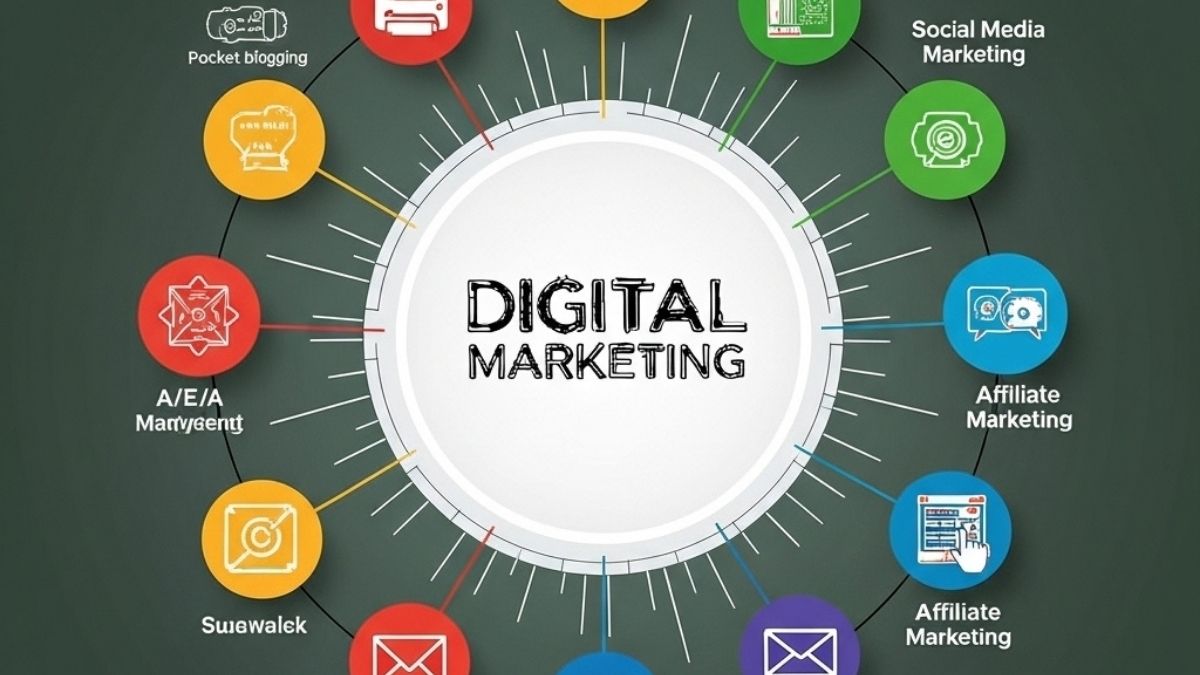

Digital Marketing Sales is no longer optional for entrepreneurs who want to build competitive, scalable, and future-ready businesses. In a world where customers research, compare, and purchase products online, the ability to align digital promotion with revenue generation determines whether a business grows or stagnates. Entrepreneurs who understand how digital channels influence buying decisions gain a significant advantage over those relying on outdated sales tactics.
Modern entrepreneurship operates at the intersection of technology, psychology, and strategy. Customers no longer respond to hard selling alone; they expect value, trust, personalization, and seamless online experiences. This means that marketing efforts must directly support sales objectives, not exist in isolation. Every campaign, platform, and message should guide potential customers toward a clear and measurable outcome.
This in-depth guide is designed for entrepreneurs, startup founders, freelancers, and small-business owners who want to transform online visibility into consistent revenue. It explores strategic frameworks, proven methods, and practical systems that help entrepreneurs attract leads, convert prospects, and retain customers in a competitive digital economy.
Digital Marketing Sales Foundations Every Entrepreneur Must Understand
Before entrepreneurs can build effective revenue systems, they must understand the fundamentals that connect marketing activities to sales outcomes. Many businesses struggle because they focus on traffic without conversion or promotion without strategy.
At its core, success depends on understanding the customer journey. From awareness to consideration to purchase, each stage requires a different message, channel, and call to action. Entrepreneurs who map this journey gain clarity on where to invest time and resources.
Another foundational element is alignment. Marketing teams, tools, and budgets must work toward the same revenue goals as sales efforts. When these functions operate separately, inefficiencies emerge and opportunities are lost.
Entrepreneurs should also understand that digital platforms are not just promotional tools—they are relationship-building ecosystems. Social media, email, search engines, and websites all contribute to trust and credibility, which directly influence purchasing decisions.
Digital Marketing Sales and the Shift in Buyer Behavior
Buyer behavior has changed dramatically in the digital age. Customers now research extensively before contacting a business. Reviews, social proof, educational content, and brand values all influence decisions long before a transaction occurs.
Entrepreneurs must adapt by providing value early in the relationship. Educational content, transparent messaging, and consistent branding help establish authority and reduce buyer resistance. When customers feel informed and confident, sales conversations become easier and more effective.
This shift means that entrepreneurs are no longer just sellers—they are educators, problem solvers, and trusted advisors. Businesses that embrace this role outperform those that rely solely on promotional messaging.
Digital Marketing Sales Strategy Development for Entrepreneurs
A strong strategy connects business goals with customer needs and digital execution. Entrepreneurs who approach strategy systematically reduce wasted spending and increase return on investment.
The first step is defining clear objectives. These may include lead generation, customer acquisition, repeat purchases, or brand expansion. Each objective requires different tactics and metrics.
Next, entrepreneurs must identify their ideal audience. Understanding demographics, behaviors, pain points, and motivations allows businesses to craft messages that resonate. Generic messaging rarely converts in competitive markets.
Channel selection is equally important. Not every platform suits every business. Entrepreneurs should focus on channels where their audience is already active, whether that’s search engines, social networks, email, or content platforms.
Digital Marketing Sales Planning for Scalable Growth
Scalability separates sustainable businesses from short-term successes. Entrepreneurs should design systems that grow without proportionally increasing effort or cost.
Automation tools, standardized funnels, and repeatable campaigns allow businesses to serve more customers efficiently. This includes email automation, retargeting ads, CRM systems, and content repurposing.
Scalable planning also involves testing and optimization. Entrepreneurs should continuously analyze performance data, identify bottlenecks, and refine strategies. Growth is rarely linear, but consistent improvement compounds over time.
Digital Marketing Sales Content-Driven Revenue Systems
Content plays a central role in modern revenue generation. Entrepreneurs who create valuable, relevant content attract qualified leads and build trust before a sales conversation even begins.
Educational blog posts, videos, webinars, and guides help address customer problems and position the business as a solution provider. Content also supports search visibility, social sharing, and email engagement.
Effective content strategies focus on intent. Informational content builds awareness, while comparison and solution-focused content supports decision-making. Sales pages and case studies help close the loop.
Digital Marketing Sales Through Authority and Trust Building
Trust is a major driver of online purchases. Entrepreneurs must demonstrate credibility through consistent messaging, testimonials, case studies, and transparent communication.
Authority is built over time through expertise and reliability. Businesses that consistently deliver value become top-of-mind choices when customers are ready to buy. This trust reduces price sensitivity and increases customer lifetime value.
Digital Marketing Sales Conversion Optimization Techniques
Attracting traffic is only half the equation. Entrepreneurs must also optimize how visitors interact with their digital assets.
Conversion optimization involves improving websites, landing pages, and funnels to guide users toward action. This includes clear headlines, compelling offers, intuitive navigation, and strong calls to action.
Entrepreneurs should also focus on user experience. Fast loading times, mobile responsiveness, and simple checkout processes directly impact sales performance.
Digital Marketing Sales and Data-Driven Decision Making
Data transforms guesswork into strategy. Entrepreneurs who track key metrics gain insight into what works and what doesn’t.
Important metrics include conversion rates, customer acquisition cost, average order value, and retention rates. By monitoring these indicators, businesses can allocate resources more effectively and scale profitable channels.
Data also supports experimentation. Small tests allow entrepreneurs to refine messaging, pricing, and offers without significant risk.
Digital Marketing Sales Customer Retention and Lifetime Value
Long-term success depends not just on acquiring customers, but on keeping them. Retention is often more cost-effective than acquisition.
Entrepreneurs should focus on post-purchase engagement through email follow-ups, loyalty programs, personalized offers, and exceptional support. Satisfied customers become repeat buyers and brand advocates.
Increasing customer lifetime value strengthens cash flow and stabilizes revenue, making the business more resilient to market fluctuations.
Digital Marketing Sales Relationship-Focused Growth
Strong relationships create sustainable growth. Entrepreneurs who prioritize customer experience build emotional connections that competitors struggle to replicate.
Listening to feedback, responding promptly, and continuously improving offerings reinforce trust. Over time, these relationships translate into predictable revenue and organic referrals.
Digital Marketing Sales Mistakes Entrepreneurs Must Avoid
Even experienced entrepreneurs make mistakes that limit growth. Common pitfalls include chasing every platform, neglecting strategy, and focusing on vanity metrics.
Another major mistake is inconsistency. Sporadic campaigns and irregular messaging weaken brand recognition and trust. Successful entrepreneurs commit to long-term execution.
Overlooking analytics, underestimating content quality, and failing to adapt to market changes can also hinder performance.
Digital Marketing Sales Best Practices for Long-Term Success
Entrepreneurs who succeed long-term follow proven best practices:
-
Align marketing with revenue goals
-
Focus on customer value, not just promotion
-
Invest in systems and automation
-
Measure performance consistently
-
Adapt strategies based on data
These principles help businesses remain competitive in evolving digital environments.
You can also read: Digital Marketing Strategies That Help Startups Grow Fast
Final Thoughts
Entrepreneurship in the digital era demands more than creativity—it requires structure, strategy, and discipline. When businesses align online promotion with revenue objectives, they unlock scalable growth and long-term stability.
By mastering Digital Marketing Sales ,entrepreneurs gain the ability to attract the right audience, convert interest into income, and build lasting customer relationships. In competitive markets, this mastery is not just an advantage it is a necessity.